
The essential reason for constructing a building is to provide a roof. Two slabs form both the ceiling and the floor, the two horizontal planes between which our lives unfold.
We long to live with our feet on the ground and our heads in the clouds, and so, within the intimacy of the home, we plant our feet firmly on the lower plane while the upper one floats above us, untouchable yet protective.
These framings are the structures that hold the floor beneath us and the roof above us, within which we love, suffer, and dream. They carry both a symbolic and a technical function: evocative in meaning, yet constructed through strict, rational precision.
Forging the Frame
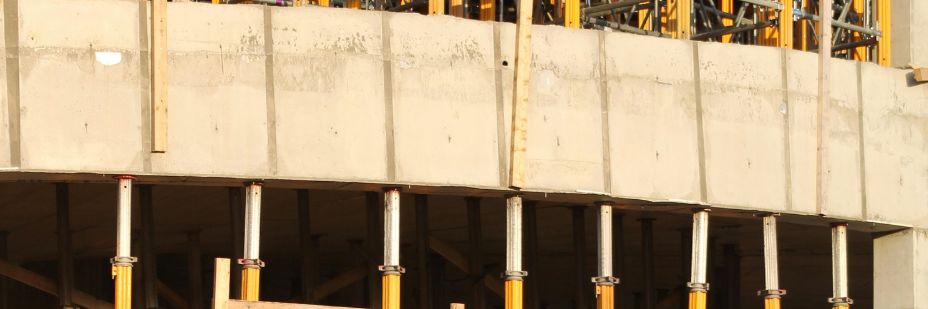
In English we call it a frame or a slab, words that sound plain beside the Spanish term “forjado”, which means both “to forge” and “to invent.” Yet the spirit is the same: both describe the act of shaping something that can hold us, of giving form and strength through effort.
A wall or a column is easily imagined, each has a single, visible purpose. But conceiving a horizontal plane that can float between supports demanded another kind of thought: a structure made not of one piece, but of many joined together, locked and woven into balance.
Every slab, every floor, is therefore a kind of forging, an intricate web of parts that support one another. It is the work of the hand and the mind combined: the art of fabricating stability out of separate pieces, and of turning matter itself into a quiet act of invention.
Receiving Load and Bracing the Structure

The framing collects the gravitational loads that the building must bear and transmits them to the supporting elements — beams, columns, walls, and others. This act of transmission also introduces a secondary role: tying and bracing the structure. In doing so, the slabs function as diaphragms, providing rigidity to the entire system.
Thus, beyond their primary task of resisting vertical forces — the weight of everything they carry — they also help balance horizontal forces, counteracting movements caused by wind, vibration, or other external phenomena, and locking together the various structural elements to ensure the building’s overall stability.
What Is a Framing Like?
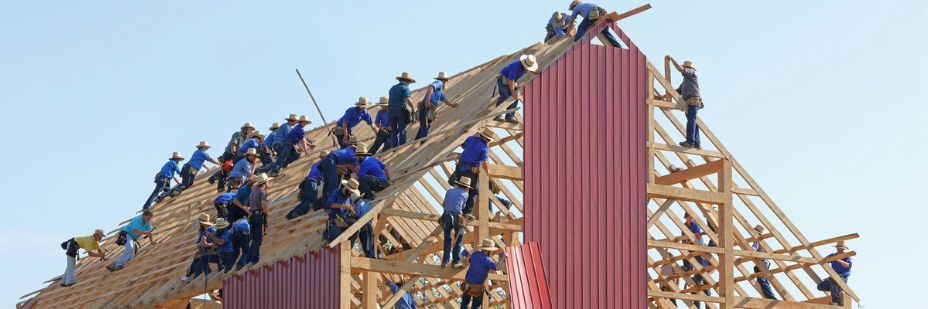
Framings are built from a network of load-bearing ribs and beams. Because these ribs must resist bending and shear stresses, early builders used wooden joists, placed parallel and close together. The small gaps between them — with little structural function — were filled or covered using various materials: rubble mixed with plaster or lime mortar, wooden planks or laths, and sometimes even reeds.
When steel and later concrete — first reinforced, then prestressed — entered the scene, wooden joists were largely relegated to restoration projects or nostalgic constructions recalling the past. For decades, they lost all prominence in mainstream building practice.
Only recently has timber begun to reclaim its place, recognized once more as a sustainable and highly efficient material. Even so, concrete continues to reign supreme. For now, an invincible monarch in the world of structural construction.
One Direction Became Two

Today, the most common type of framing is the unidirectional concrete slab, designed to form a very rigid horizontal plane. Concrete joists usually arrive on-site partially prefabricated, consisting only of their lower portion — hence the name semi-joists. These are laid out in place, and the spaces between them are filled with lightening vaults, which have no structural function but reduce the overall weight so that not everything is solid concrete. After that, the steel reinforcements are set, and finally, concrete is poured over the entire assembly, forming both the upper part of the ribs and the surface between them.
Originally, framings were always unidirectional: wooden joists ran parallel and in the same direction, a system later replicated by steel and concrete structures. But with concrete came a simple way to create bidirectional slabs: ones that can flex in two perpendicular directions, achieving greater spans with minimal thickness. These are built without prefabricated joists: the ribs are cast on-site by pouring concrete between and above lightening blocks, conceptually similar to small vaults. The result is a grid of reinforced concrete ribs crossing in both directions.
In steel construction, an interesting variant consists of placing the joists farther apart than usual and covering them with a ribbed steel plate on which the concrete is poured. This sheet — known as composite decking or a collaborative plate — not only serves as formwork to contain the concrete but also acts as reinforcement, producing a composite slab that unites both materials in one structural effort.
By extension, the term slab is also applied to those built with prefabricated prestressed concrete panels, hollowed out to reduce weight and placed side by side without spaces between beams. And even, sometimes, to solid reinforced concrete floors. Though this may be an abuse of language. For stones, after all, are simply stones.