Eating is a basic need, but throughout human history it has never been only a functional act. It is a ritual, a complex sensory experience, a cultural gesture that brings together space, time, and matter.
Food is memory, tradition, family—and in haute cuisine it has long dialogued with design and architecture, becoming part of a broader narrative. In this story, the project does not simply “contain” the gastronomic experience: it interprets it and, at times, amplifies it.
Food and Architecture: an Ancient Link

From the monumental kitchens of Renaissance palaces to medieval taverns, from Enlightenment cafés to the bourgeois dining rooms of the nineteenth century, the way we eat has always reflected the way we live and spend time together.
With the twentieth century, the restaurant stopped being merely a “functional” place to eat outside the home and became a cultural device, capable of expressing values, worldviews, and social change. Modernity introduced new ways of inhabiting the city, new rhythms, and new relationships, and the restaurant became one of the privileged spaces where all of this takes shape.
Eating Out: a Story of Architectural and Social Transformation
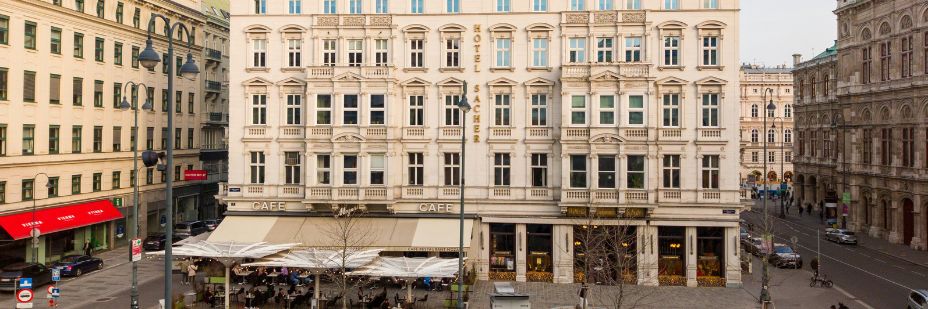
A revealing example is the Viennese cafés of the early twentieth century: not just venues, but true urban salons, meeting places for artists, architects, writers, and intellectuals. Their architecture, furnishings, and even the way people sat and stayed shaped an idea of modern sociality: slow, reflective, and attentive.
Futurist restaurants, by contrast, used food and space as instruments of rupture: rejection of tradition, sensory experimentation, provocation. Here, the restaurant became explicitly political and ideological. In the 1960s and 1970s, with avant-garde and radical experimentation, restaurants entered the field of design research—through new layouts, unconventional materials, and immersive experiences.
At the same time, cuisine itself was changing. From domestic knowledge passed down through generations, it became a field of research, increasingly in dialogue with science, technology, and storytelling. The chef took on an authorial role, and the dish became a language. One that, to express itself fully, needs a space that embodies the chosen identity.
When Food and Space Speak the Same Language
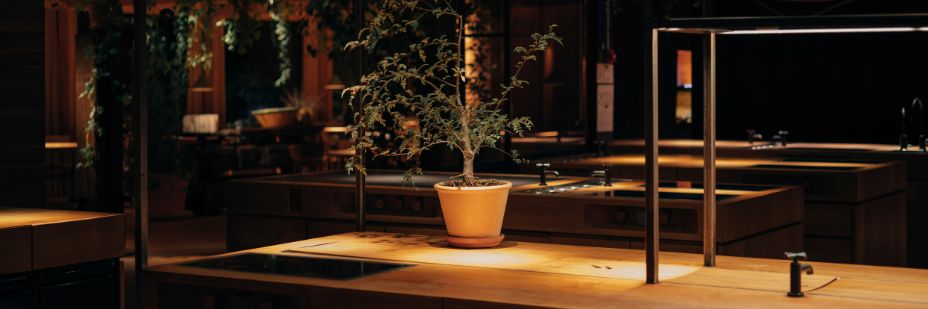
For architects and designers, the restaurant is an extraordinary laboratory: a place where aesthetics and function meet directly, where the perception of space affects taste, and where every detail—from light to sound, from materials to table settings—helps build memory. It is no surprise, then, that some of the world’s most iconic restaurants are also true design manifestos.
It is also no coincidence that, even though design is not among the official criteria of the Michelin Guide —which evaluates cuisine based on ingredient quality, technique, harmony of flavors, the chef’s personality, and consistency over time—space still plays a decisive role in the overall experience. Design does not earn stars, but it can significantly enhance the gastronomic proposal. A well-calibrated project amplifies the culinary narrative, supports the service, and turns the meal into a complete sensory journey, where sight, taste, and spatial perception together help define excellence.
Six Beautiful Restaurants Where Design Meets Taste
Some restaurants embody this vision in an exemplary way. With the definitive closure of the Four Seasons Restaurant in New York—designed in 1959 by Philip Johnson inside Mies van der Rohe’s Seagram Building—not only did a dining room disappear, but also a true manifesto of Modernism applied to hospitality. It was a place that showed how architecture can shape the gastronomic experience, elevating it into a cultural and collective act.
In the wake of that legacy, we have selected six iconic restaurants, signed by major names in architecture and design, where space is not simply a backdrop to cuisine but becomes an integral part of it—helping to build a coherent, immersive, and memorable experience.
Noma – Copenhagen, Denmark Project by BIG (Bjarke Ingels Group)
Noma is not only one of the most awarded restaurants in the world, but also an emblematic example of how architecture can interpret a culinary philosophy. BIG’s project translates the idea of New Nordic Cuisine into a contemporary “village” made up of simple volumes, natural materials, and an ongoing connection with the surrounding landscape.
The spaces are conceived to accompany René Redzepi’s gastronomic narrative: wood, natural light, views of the water, and a sequence of environments that invite slowness. A radical, experimental cuisine thus finds a coherent container—one that reinforces the message of sustainability and place.
El Celler de Can Roca – Girona, Spain Project by RCR Arquitectes
RCR Arquitectes, winners of the Pritzker Prize in 2017, designed the spaces of El Celler de Can Roca as an almost sensory extension of the Roca brothers’ cuisine. Glass, steel, and dark, reflective surfaces create a suspended atmosphere, where the boundary between inside and outside seems to dissolve.
Here, design does not seek protagonism. Instead, it works by subtraction, leaving room for gastronomic storytelling: a poetic, emotional cuisine deeply tied to memory and the Catalan territory. The result is a refined balance between architectural rigor and culinary sensitivity.
Odette – Singapore Project by André Fu
Located inside the National Gallery Singapore, Odette is a refined example of how interior design can engage with a historic context without becoming mimetic. André Fu creates an ethereal, sophisticated space, built around light surfaces, carefully calibrated details, and a skillful use of natural light.
Julien Royer’s cuisine — elegant and contemporary — finds a perfectly tuned setting here. The project does not overwhelm the gastronomic experience, but accompanies it with discretion, translating the precision and delicacy of the dishes into space.
Ultraviolet – Shanghai, China Project by Paul Pairet with a multidisciplinary team
Ultraviolet is perhaps the most extreme example of integration between food, design, and technology. One table, a handful of diners, and a deliberately neutral space that is transformed through lights, sounds, projections, and scents synchronized with each course.
Here, architecture becomes a total narrative device. Paul Pairet’s cuisine is conceptual, provocative, and multisensory, and the space is designed to eliminate distractions and heighten perception. The restaurant closed at the chef’s request in 2025, but the experience has already challenged the very idea of what a restaurant can be, opening up new possibilities for future design.
Under – Båly, Norway Project by Snøhetta
Under is far more than a restaurant: it is an immersive spatial experience that takes architecture below the sea’s surface. Designed by Snøhetta as a concrete monolith that seems to both emerge from and sink into the North Sea, the building dialogues directly with the Norwegian coastline, blurring the boundary between the built and the natural.
Its rough exterior surfaces, intended to be colonized by marine life, turn the structure into an artificial ecosystem. Inside, an essential, material palette frames the view toward the large panoramic window onto the seabed.
The cuisine reflects the same philosophy: a menu rooted in Nordic territory, based on local, seasonal ingredients—many drawn directly from the surrounding sea. Here, architecture is not just a setting, but part of the gastronomic narrative, intensifying the sensory relationship between food, landscape, and spatial perception.
Alchemist – Copenhagen, Denmark Project by Studio Duncalf
A double presence for Denmark: Alchemist is a contemporary manifesto, combining gastronomy, art, architecture, and ethical reflection. The space is theatrical and immersive, almost museum-like, with environments that shift and surprise, culminating in the large dome.
Rasmus Munk’s cuisine addresses social and environmental questions, and architecture becomes its medium: not a simple container, but a narrative platform that engages guests on both an emotional and intellectual level.