“Education is the most powerful weapon which you can use to change the world.” Nelson Mandela’s words remind us that the future is built through knowledge. Yet education is not only about teaching—it is about how we teach. The quality of the learning experience shapes both individuals and societies, influencing how we think, live, and engage with the world. While excellent programs, teachers, and content are essential, other elements also deeply affect the educational process. Among them, beauty.
Architecture as Part of the Learning Experience
Many contemporary pedagogical studies emphasize that educating through beauty is a vital component of personal and collective development. The quality of the learning environment directly affects concentration, creativity, and psychological well-being. For this reason, today’s university campuses are no longer merely spaces for transmitting knowledge; they are environments where form, function, and aesthetic perception come together to shape a holistic educational experience.
Beauty in Historic and Modern Universities
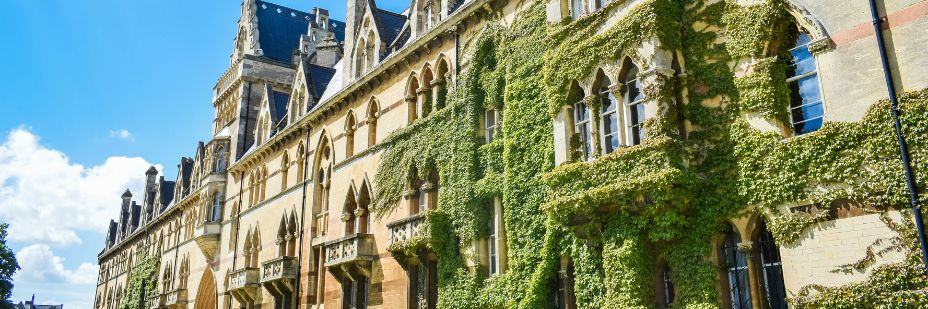
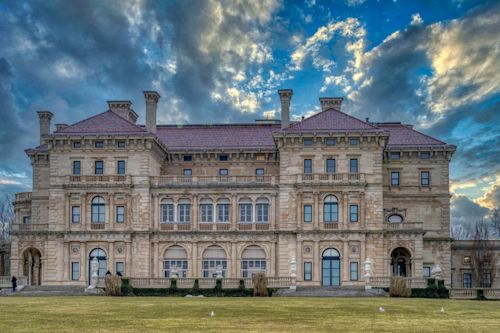
Becoming accustomed to beauty—understood as the harmony between architecture, nature, and everyday life—means learning to recognize balance, to care for one’s surroundings, and ultimately, to cultivate a sense of citizenship. Historic universities have long embodied this ideal: institutions such as the University of Oxford, Trinity College Dublin, the University of Bologna, the University of Cape Town, and the University of Salamanca demonstrate how the physical setting of learning becomes an essential part of its cultural identity. These campuses are celebrated not only for their academic prestige but also for their architectural splendor, standing among the most beautiful universities in the world.
In the twentieth century, this tradition evolved through the work of renowned architects such as James Stirling—creator of the History Faculty at the University of Cambridge—Eero Saarinen, who designed the Ingalls Rink at Yale University, and Álvaro Siza, both professor and architect of the Faculty of Architecture at the University of Porto. Each reinterpreted the dialogue between form and knowledge through the lens of modernity.
Today, the question remains: which contemporary universities truly succeed in merging innovation, sustainability, and beauty? These are places that do more than host students—they inspire them, offering a renewed vision of how space, learning, and well-being can coexist:
Bocconi Campus, Milan / SANAA
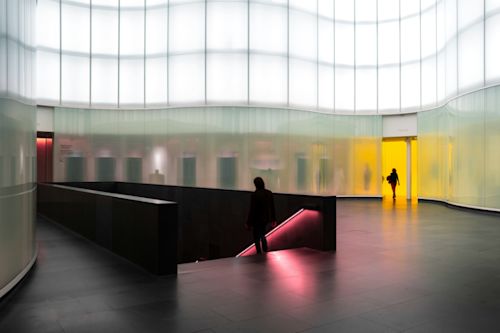
The new Bocconi University campus in Milan, designed by the Japanese studio SANAA (Kazuyo Sejima and Ryue Nishizawa), redefines the relationship between the university and the city. Completed in 2019, the complex unfolds as a series of translucent volumes with soft, continuous forms set within a generous public park. The lightness of glass and aluminum, the fluid curvature of surfaces, and the absence of rigid boundaries evoke a sense of permeability—between inside and outside, between knowledge and urban life.
From a pedagogical perspective, this architecture expresses a clear educational vision. Its transparency and spatial fluidity promote open, interdisciplinary learning, where students and teachers naturally converge in courtyards and shared spaces. The campus does not isolate itself but extends into the fabric of the city, becoming a living laboratory of civic interaction. Here, education takes place not only in classrooms, but through the daily experience of coexistence, movement, and collective beauty.
James Cook University, Townsville (Australia) / HASSELL
Located in northern Queensland, James Cook University is among the world’s most environmentally responsive campuses. The masterplan, designed by the architecture firm HASSELL, reflects deep respect for its tropical setting. The design favors natural ventilation, solar protection, and the use of local materials, with light pavilions, shaded walkways, and interconnected green spaces that create a cohesive network of adaptable, welcoming environments.
The campus embodies the university’s mission—dedicated to the study of ecology, biodiversity, and sustainability. Every building and open space is part of the learning process: architecture becomes a teaching instrument, a tangible example of climate-sensitive and responsible design. Studying and living in this setting means experiencing first-hand what it means to inhabit a space in harmony with nature.
Library & Learning Center, WU Vienna / Zaha Hadid Architects
The Library & Learning Center at the Vienna University of Economics and Business (WU Wien), designed by Zaha Hadid Architects, stands as an emblem of contemporary architecture in the service of education. Completed in 2013, the building is instantly recognizable for its bold geometries, sweeping diagonals, and sculptural dynamism—hallmarks of Hadid’s architectural language. At its core lies a vast, inclined atrium that connects multiple levels, functioning as both a covered public square and a symbolic space for the exchange of ideas.
From an educational standpoint, the project captures the essence of collaborative learning. The Library & Learning Center is not simply a repository of books, but a vibrant social and intellectual hub for interaction, debate, and shared discovery. Its diversity of spaces—from quiet study areas to open informal zones—translates into built form the pedagogical principle of flexibility, where knowledge grows through dialogue. It is a building that teaches through its architecture: dynamic, inclusive, and profoundly democratic.
Tama Art University Library, Tokyo / Toyo Ito & Associates
At Tokyo’s Tama Art University, architect Toyo Ito has created a library that is simultaneously structure, landscape, and atmosphere. Completed in 2007, the building unfolds as a rhythmic series of reinforced concrete arches that generate fluid, continuous spaces suspended between interior and exterior. Natural light softly filters through, tracing shifting patterns throughout the day. The result is a serene, meditative space that encourages both focus and reflection.
Pedagogically, the Tama Library embodies the importance of sensory experience in art education. Here, students learn by inhabiting beauty itself—light, material, and proportion become silent teachers. The space invites freedom of use: one can sit, study, observe, or simply absorb the ambience in an unbroken dialogue between architecture and nature. It stands as a masterful demonstration of how aesthetic experience can nurture cognitive well-being.
Nanyang Technological University, The Learning Hub “The Hive”, Singapore / Heatherwick Studio
Designed by Heatherwick Studio, “The Hive” offers one of the clearest demonstrations of how architecture can inspire interaction and the exchange of knowledge. Opened in 2015, the complex consists of twelve cylindrical towers arranged around a vast central atrium. The textured concrete façades and open, interconnected corridors across multiple levels create an organic, almost natural environment—one in which the distinction between classroom and communal space dissolves.
The Learning Hub is conceived as a true educational ecosystem. Its aim is to move beyond traditional, lecture-based teaching toward a model of active, collaborative learning, overturning the paradigm of the linear classroom. Each floor contains flexible rooms, informal work areas, and open meeting spaces designed to foster spontaneous encounters between students from diverse disciplines. Here, architecture itself becomes a form of pedagogy: the circular plan and central void encourage dialogue, creativity, and a shared sense of belonging. The Hive represents an innovative model of the university as a living community—where beauty is expressed through participation.
Beauty as an Infrastructure of Knowledge
Today’s universities are more than centers of education—they are intricate ecosystems where architecture, technology, and pedagogy intersect to create more inclusive, meaningful learning experiences. Across these examples runs a shared conviction: space itself educates. It teaches respect, proportion, and collaboration. It teaches silence and light, the rhythm of time and the presence of landscape. In this sense, contemporary university architecture becomes a silent but powerful form of education. One that transmits values of openness, environmental responsibility, and shared beauty.