
The recent outbreak of hantavirus on the expedition cruise ship Hondius escalated from an isolated problem to a global health crisis in a matter of days. The particular circumstances of a vessel like this, a 107-meter polar exploration ship designed to navigate the remote waters of the Arctic and Antarctic, raise a key question: what health and safety measures must be designed and implemented to prevent medical emergencies in such extreme environments?
Remote Waters, Different Risks
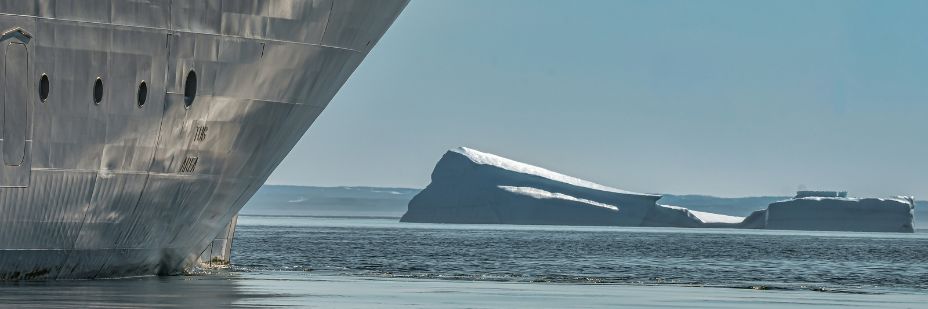
Health guidance and recommendations are established from the very start of the voyage. Passengers are reminded that journeys through remote areas without access to sophisticated medical facilities require those with high-risk conditions or daily medical treatment needs to consider staying ashore.
Expedition ships do not operate like large tourist cruise liners, a reality that shapes every design, safety, and operational decision. An evacuation in the Arctic bears no resemblance to one in the Mediterranean. In polar waters, any intervention is shaped by multiple variables acting simultaneously: reduced visibility, sudden storms, the absence of nearby airports, limited air rescue coverage, and extremely narrow weather windows. The International Maritime Organization (IMO) Polar Code requires ships operating in polar regions to assess their operational limitations, rescue capabilities, and emergency scenarios in advance.
Safety Starts at the Drawing Board

On an expedition cruise, medical safety begins long before an emergency arises. It starts with the design of the ship itself. Passenger and crew comfort remains important, but interior architecture becomes part of the operational survival strategy. Response time depends not only on medical personnel or evacuation protocols, but also on how people move through the vessel, how quickly certain areas can be isolated, and how smoothly operations can continue without generating chaos or bottlenecks.
In this context, the principles of accessibility take on a much broader dimension. Barrier-free design not only improves the travel experience, it also reduces friction in critical situations. An accessible space allows patients to be transferred more quickly, prevents bottlenecks during internal evacuations, and helps the crew maintain operational control under pressure.
The compartmentalization of spaces, alternative circulation routes, non-slip surfaces, automated access systems, and the ability to separate passenger and crew flows are all part of this same philosophy. Everything is designed to ensure the vessel can function as a first line of medical response for longer than would normally be expected.
An adequate framework of medical containment

On board an expedition ship, medical care is not designed to replicate a hospital — it is designed to operate within a framework of clinical containment. Regulations require any ship sailing in international waters with more than 100 people on board, on voyages exceeding 72 hours, to carry a qualified physician. Large cruise lines typically go further, staffing emergency doctors and nurses available around the clock.
In general, the medical facilities on large cruise ships are equipped with X-ray machines, cardiac monitors, defibrillators, ventilators, blood analysis laboratories, and even surgical and orthopedic materials. Smaller vessels such as the Hondius operate under more limited conditions: on this type of ship, the primary objective is stabilization and first aid while managing potential evacuations in remote locations.
Remote Diagnostics

Telemedicine has become a critical component of offshore healthcare. Medical teams can consult in real time with specialists on land, sharing clinical data, images, and test results via satellite links. In many cases, these remote consultations allow for more precise diagnoses or adjusted treatments without interrupting the ship's operations.
The evolution of portable diagnostic equipment has reinforced this capability: compact ultrasound devices, multiparametric monitors, and rapid tests make it possible to obtain a reliable initial clinical assessment without depending on full hospital infrastructure. As a result, medicine on board no longer operates in isolation — it functions as an intermediate node between immediate care and medical evacuation.
When Evacuation is the Only Option
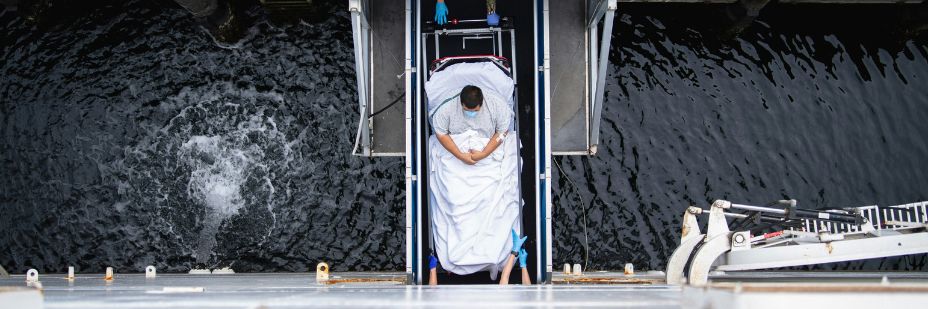
Large ships and cruise liners follow carefully studied protocols for cases involving death or serious infectious outbreaks on board, covering everything from the transfer of the sick and deceased to communication guidelines designed to prevent panic or distress.
Final authority rests with the ship's captain, who is responsible for coordinating communications and decisions with external authorities. When a crisis of the magnitude of the Hondius situation unfolds — the ship was forced to sail for 13 days with a deceased passenger on board — the captain is responsible for notifying the company, maritime rescue services, and the nearest coastguard, as well as contacting the nearest port of call. This includes sharing all relevant details such as date, time, and location, and ensuring the body is transferred to the ship's morgue. These facilities are kept separate from common areas to prevent unauthorized access. In their refrigerated rooms, cruise ships can preserve remains for several days if necessary, while maintaining appropriate sanitary conditions until the vessel reaches port.
The final decision on a ship's disembarkation and port arrival is governed by the WHO International Health Regulations, which set out how ports must coordinate to authorize safe berthing, when and how to carry it out, and how to manage reliable interaction with on-board personnel.
In practice, the complexity of this process increases significantly in polar or open ocean environments, where weather conditions or the distance to operational bases prevent an immediate response. In many cases, the decision to evacuate is the result of an ongoing assessment weighing the ship's medical capabilities against the realistic possibility of external intervention under safe conditions.
In the case of the Hondius, it was the European Centre for Disease Prevention and Control that issued a guidance document with recommendations on isolation and quarantine measures. This document addressed not only the medical situation of those on board and the procedures for prevention and control, but also risk communication, community engagement, and the management of misinformation.
Managing Fear

In this type of crisis, communication and information management become critical elements of safety. With uncertainty threatening to take hold, it is essential that the captain and crew keep passengers informed with clear, consistent, and ongoing instructions. The overriding priority is to avoid confusion and reduce the risk of panic. Each crew member has defined responsibilities that make them an active link in the response chain, from managing the flow of people through the vessel, to facilitating access to medical areas, keeping transfer routes clear, and organizing space during an emergency.
Safety, ultimately, does not depend solely on medical protocols or technical equipment. It depends on the ability of the entire vessel to function as a coordinated system under pressure.