For years, climate change has been addressed primarily as an environmental or energy challenge. Extreme weather events, biodiversity loss, and ecosystem collapse are among the global risks of greatest concern. However, a growing number of voices are advocating for tackling the problem as a design challenge: one that directly impacts how buildings and structures are conceived, constructed, and operated.
In this context, climate change is also redefining the requirements for access and security systems in buildings and infrastructure, calling into question their durability, reliability, and long-term performance.
Building for Climate Resilience
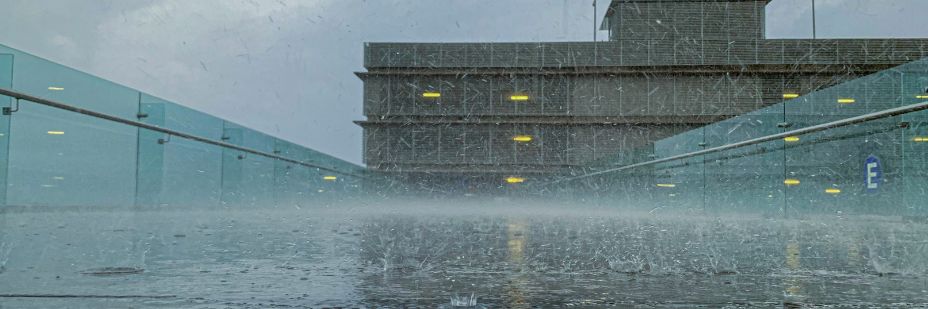
Cities and buildings are on the front line of exposure to heat waves, extreme rainfall, prolonged humidity, and persistent pollution. This reality invites a rethinking of how the built environment is designed, making it more resilient, comfortable, and healthy, and better equipped to improve people's quality of life.
Although awareness among designers, architects, and facility managers about the accelerating pace of climate change is growing, the prevailing consensus is that current actions are not transformative or fast enough. Anticipating future climate conditions requires rethinking urban planning, material selection, building orientation, risk assessment, and the integration of natural and technical solutions.
Access Systems Capable of Withstanding Greater Stress
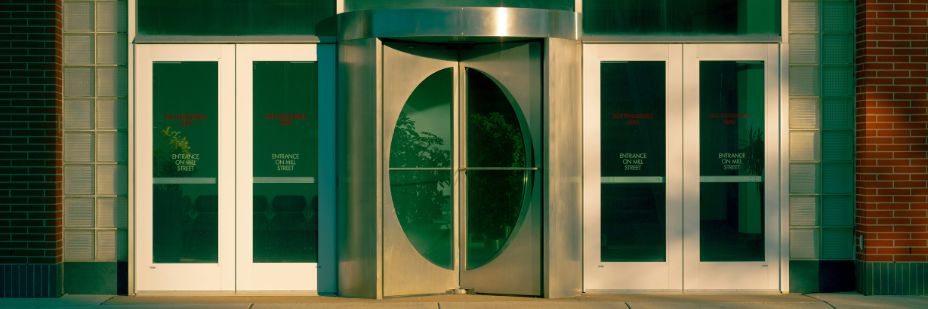
In this process, access and control systems are often overlooked. Doors, locks, and devices have historically been designed under climatic assumptions that no longer always hold. Heat stress, water exposure, and accelerated material degradation directly affect their reliability, even when the rest of the building appears to function normally.
Beyond their day-to-day function, access systems have become one of the pillars of any critical infrastructure. They condition the safety of people, the operational continuity of strategic facilities — such as airports, healthcare centers, data centers, and power plants — and the overall capacity to respond in emergencies.
Rethinking these systems through the lens of climate resilience is not an isolated technical matter. It is a design decision with direct impact not only on residential and corporate environments, but also on the most essential facilities.
Four Climate Threats Putting Access Systems to the Test

Climate change does not introduce a single problem, but a combination of environmental factors that act continuously on a building as a whole. For access systems, this means operating in conditions that are more aggressive and less predictable than those for which they were originally designed.
2024 was the warmest year in 175 years of recorded history. The sustained rise in temperatures and the increasing frequency of extreme heat events alter the physical behavior of doors and enclosures, affecting the stability of electronic components. The expansion of materials and prolonged heat exposure require a rethinking of tolerances, installation locations, and long-term performance expectations, particularly for outdoor access points.
Persistent humidity and salinity, especially in coastal environments, accelerate corrosion and degradation. Elements that perform reliably in temperate climates can lose their dependability when constantly exposed to water vapor, heavy rain, or saline atmospheres, making the environment a determining factor in design decisions.
Flooding and water ingress represent one of the most visible risks. They affect not only doors and devices at ground level, but can compromise the operability of entire buildings when access ceases to function at critical moments. Designing for isolated events is no longer sufficient when the risk becomes recurring.
Dust, sand, and urban pollution add another layer of progressive wear. Sand and dust storms, combined with soil degradation and urban sprawl, increase the exposure of access systems to particles that affect mechanisms, joints, and sensors.
Approximately 2 billion tons of dust are emitted into the atmosphere each year. In 2024, sand and dust storms affected 330 million people across 150 countries. A situation serious enough for the United Nations to designate 2025–2034 as the Decade to Combat Sand and Dust Storms.
From Durability to Climate Resilience

Traditionally, access systems have been designed to operate under relatively stable environmental conditions. Climate change displaces that frame of reference: the challenge is no longer simply withstanding the test of time, but maintaining functionality during episodes of disruption.
This shift means prioritizing climate resilience over mere durability. The selection of materials capable of withstanding prolonged exposure to heat, humidity, or pollution, along with protection against water and dust, becomes a strategic decision, particularly at critical points within a building.
Resilience also depends on functional redundancy: the ability of a system to continue operating, or recover quickly, when one of its components fails. This is a key approach to ensuring a building's operational continuity and safety.
Access systems are evolving from passive elements into active contributors to a building's resilience strategy. Remote monitoring of system status allows degradation or failures to be detected during extreme events, enabling a faster and better-informed response.
Beyond hardware, climate change forces a rethinking of the rules that govern access. In emergency situations or operational disruptions, buildings need to dynamically adjust flows and permissions. Integrating access systems with evacuation plans and broader building management strategies strengthens the capacity to respond to extreme events.
Design With a Long-Term Vision

Just as architecture and infrastructure are incorporating adaptation criteria, access systems need to evolve as an integral part of the building. Their reliability and responsiveness to environmental stress have a direct impact on safety, operational continuity, and the experience of the people who use them.
Looking ahead, resilience is no longer an added value but a fundamental design criterion. Designing access systems prepared for a changing climate is not about anticipating a distant scenario. It is about responding responsibly to a reality that is already here.
Studies by international organizations such as the OECD, the World Bank, and UNEP estimate that incorporating climate resilience into new infrastructure investments tends to increase costs by around 3% compared to the base investment. A modest premium that stands in sharp contrast to the long-term benefits of reducing future disruptions and damage.